 Technology News Back to channel
Memory Prices "Cooled" in Q3. That's Not Relief — That's the Consumer Hitting the Ceiling.
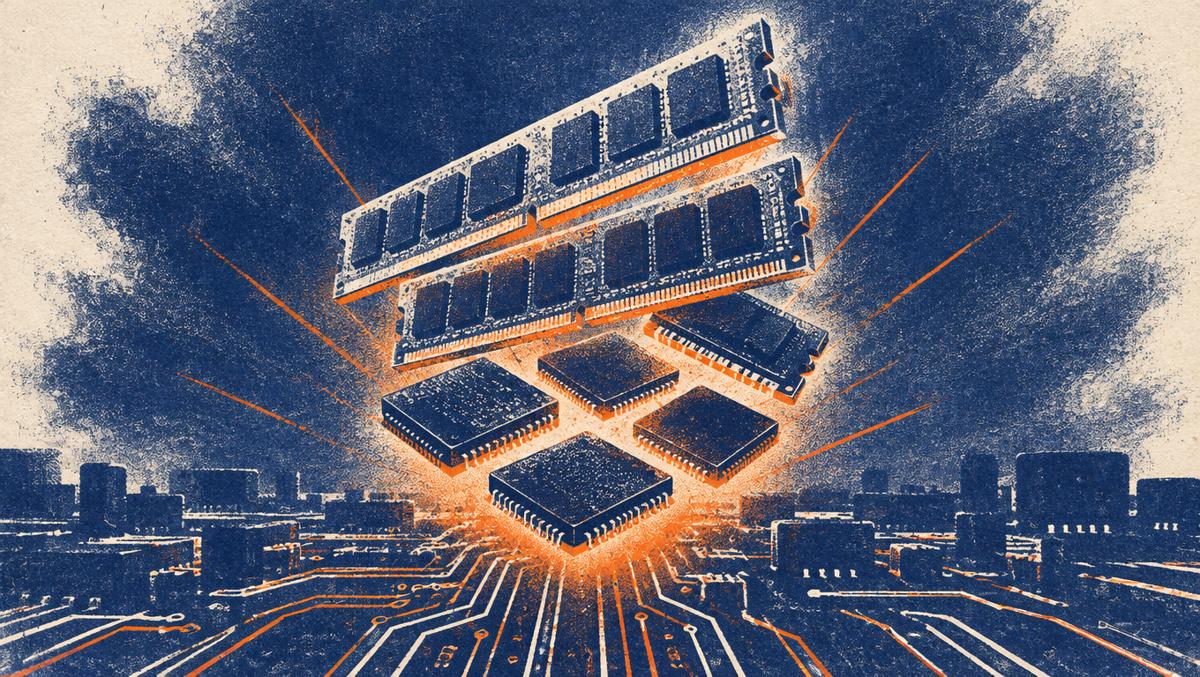
Memory Prices "Cooled" in Q3. That's Not Relief — That's the Consumer Hitting the Ceiling.
Published: September 11, 2026 | Reading Time: ~11 minutes | Channel: Technology
A guy loaded 256GB of RAM into his machine for about $300. A few months later, the same kit would have run him roughly $3,000.¹ He's not a hedge fund. He's a game developer. That's the AI memory economy in one sentence: the most important component in your computer repriced by an order of magnitude in under a year, and almost nobody outside the server aisle is connecting the dots.
This week, the headlines got superficially soothing. Memory prices are "cooling." TrendForce's latest survey has conventional DRAM contract prices rising "just" 13–18% quarter-over-quarter in Q3 2026, down from the roughly 60% jump recorded in Q2, with NAND moderating to 10–15%.² Sound like relief? It isn't. It's the opposite. The slowdown isn't coming from new supply — supply is still critically short. It's coming from the fact that consumers, PC makers, and phone brands have simply run out of capacity to pay.² That's not a market healing. That's a market breaking — in your direction.
And while Wall Street spends its evenings arguing about oil and the Fed's next move, the quiet math says memory is already writing checks the inflation report will have to cash. More on that in a minute, because it's the part nobody is pricing.
The 3-to-1 Trade That Ate Your RAM
Here's the mechanism, and it's beautifully ruthless.
Every AI accelerator needs high-bandwidth memory (HBM) wrapped around it — Nvidia's Rubin GPU carries up to 288GB of HBM4 per chip, installed as stacks of 12-to-16 memory layers fused into a "cube."¹ Making HBM is grotesquely capacity-intensive: for every bit of HBM a fab produces, it forgoes roughly three bits of conventional memory.¹ That's Micron's own business chief, Sumit Sadana, explaining the arithmetic on CNBC.
So when the hyperscalers arrived with unlimited budgets and long-term agreements (LTAs) — some running five years or longer³ — the memory giants did what any rational oligopolist would do: they reallocated. Capacity flooded toward HBM and server DRAM. Micron outright discontinued its consumer PC-builder memory segment in December to feed the AI machine.¹ SK Hynix had secured demand for its entire 2026 RAM production capacity by last October.¹ And Sadana's summary of 2026 was three words long: "We're sold out."¹
The result is the most violent repricing in the industry's history:
| Period | Conventional DRAM contract price (QoQ) | NAND Flash contract price (QoQ) | Source |
|---|---|---|---|
| Q1 2026 | +50–55% (called "unprecedented" by TrendForce's Tom Hsu) | rising across the board | ¹ |
| Q2 2026 | +58–63% | +70–75% | ⁴ |
| Q3 2026 (proj.) | +13–18% | +10–15% | ² ⁵ |
J.P. Morgan Global Research puts the full arc in perspective: DRAM prices will have risen more than 400% from the start of 2024 to the end of 2026.³ "RAMageddon is the new normal," as Lenovo bluntly put it.²
And the money followed the prices. Second-quarter 2026 DRAM industry revenue hit US$154.73 billion, up 59.5% QoQ — in a single quarter.⁵ Samsung booked $60.98 billion (+63.4% QoQ, 39.4% share). SK Hynix took $38.59 billion (+37.9%). Micron grew fastest of the big three, revenue up 65.5% QoQ to $36.0 billion⁵ — and that was before it posted a fiscal Q3 with $41.46 billion in revenue, up 345.7% year over year, at an 84.6% GAAP gross margin.⁶ An 84.6% gross margin. In a memory business. The same business that spent decades bankrupting anyone who touched it outside a boom.

By the Numbers: A Market Split in Two
The important structural fact isn't the price level. It's that there are effectively two memory markets now, and only one of them has a seat at the table.
Market one: the contracted tier. Micron has signed Strategic Customer Agreements carrying approximately **$100 billion in minimum-price contract revenue across 14 of 16 deals, backed by $22 billion in cash deposits and letters of credit.**⁶ SanDisk has locked in $93.9 billion in minimum revenue under its new contract model, covering roughly two-thirds of its fiscal 2028 bits.⁶ These customers don't shop. They reserve. Their supply is guaranteed, their floors are negotiated, and their price risk is largely capped.
Market two: everyone else. Spot-priced, allocation-starved, and taking it on the chin. Module makers — the people who supply your neighborhood system integrator — are staring at a projection that DRAM supply to them could drop by more than 70% in 2027, per Apacer's CEO.² The small-tier suppliers that pick up the scraps are posting absurd growth for the same reason: Nanya's revenue rose 68.3% QoQ, Winbond's 75.8%, PSMC's 167.8%⁵ — not because they got better, but because they're the last vendors willing to sell to customers the giants abandoned.
The consumer transmission is already visible in official statistics. The CPI for software and accessories and the PPI for storage devices have both risen 23% since the end of 2024, and the import price index for computers, peripherals and parts is up 37%.³ Memory went from roughly 10–18% of a laptop's hardware cost in the first half of 2025 to about 20% by the start of this year.¹ Dell's COO Jeffrey Clarke said it out loud last November: the cost increase "will make its way into the customer base."¹ It has.
Why "Cooling" Is the Wrong Word
Here's the contrarian core, and I'll say it plainly: the Q3 moderation is not supply responding to high prices. It is demand dying at the consumer end.
Read TrendForce's own language. The moderation "reflects a shift in some demand from high-capacity RDIMMs toward lower-capacity products, as well as the limited ability of PC and smartphone customers to absorb further price increases."⁵ Tom's Hardware's summary of the same survey is blunter still: the cooldown is "driven by consumer electronics manufacturers' unwillingness and inability to absorb higher memory costs after months of relentless price increases, rather than by improved supply. In other words, memory remains in short supply, but consumers are no longer willing to keep paying ever-higher prices."²
That distinction matters enormously, because it changes what comes next:
- If prices were cooling because supply caught up, you'd expect relief through 2027. New fabs would be ramping, inventories rebuilding.
- If prices are cooling because buyers hit a wall, you get something much uglier: a shrinking consumer market, a memory industry that doesn't care because AI pays triple, and permanently higher floor prices for every device you buy.
It's the second one. Supplier inventories sit at historic lows.⁵ Meaningful new enterprise-SSD capacity isn't expected until late 2027 or 2028.⁴ Micron's new fabs come online in Boise in 2027 and 2028, with the Clay, New York site arriving around 2030.¹ The industry's own management is guiding that tightness "could persist beyond calendar 2027."⁶ The supply response is a 2027–2030 story. Your next laptop purchase is a 2026 problem.
And the "cooling" itself is conditional on the weaker side of the market staying weak. TrendForce explicitly notes consumer DRAM — the segment stripped of supply most aggressively — is still posting the strongest price growth, because suppliers have simply curtailed shipments there.⁵ When a product category gets more expensive precisely because vendors stopped serving it, that's not a cycle. That's triage.
The Fed's Unpriced Second Front
Now the part I flagged at the top.
The market narrative this week: oil surged past the $100s, producer inflation came in hot, two-year yields backed up to 4.5835% after a 12bp overnight jump, and rate-hike odds for this month's meeting climbed to roughly **70%**⁷ — all against a Fed that has held its target at 3.50%–3.75% for five straight meetings while three dissents favored hiking.⁸ The story is energy. It's always energy.
But J.P. Morgan's economists quietly did the arithmetic on chips, and it doesn't fit the oil-only script. Their estimate: every 10% increase in hardware costs adds roughly 0.1% to core CPI and PCE inflation, with the memory shock alone contributing a 0.2–0.4 percentage point lift.³ The import price index for computers and parts is up 37% — that's not a rounding error, that's a second inflation front marching through the goods basket while everyone watches the oil tape.³
So when the Fed hikes — and a 70% probability says it does — part of the inflation it's chasing was manufactured by the very AI capex boom that markets are celebrating. Hyperscaler capex is projected to exceed $600 billion in 2026, up 40% year over year;⁹ Meta alone raised its capex guidance by $10 billion specifically citing AI hardware and memory costs.³ The same spending that powers the earnings season is leaking into the inflation data that forces the central bank's hand. The boom is financing the tightening that will eventually test the boom. You don't need to be a permabear to notice the loop — you just need to read both pages.
J.P. Morgan's memory analyst Jay Kwon thinks the shortage math gets worse before it gets better: given ~90% annualized declines in token cost per watt and rising agentic AI workloads, "it is not a secret that the industry will stay in shortage for multiple years."³ Multiple years. The Fed can't hike its way out of a fab shortage, and no fab gets built in a quarter.
What This Means For You
Enough macro. Here's the playbook, sorted by who you are.
If you buy computers — for yourself or a team:
- Stop waiting for prices to fall. They won't this cycle. The projected glide path is +13–18% QoQ on DRAM through Q3, with real relief deferred to 2027–2030 fab timelines.¹ ² A machine you'll need in early 2027 is cheapest today. That is the single most actionable sentence in this article.
- Buy the memory, not the marketing. Right-size specs instead of chasing them: 16GB genuinely suffices for office and browser workloads; paying the AI-tax premium for 64GB of headroom is how you donate money to Samsung's quarter. Conversely, if your workload genuinely needs 32GB+, buy it now and buy it once — kits that cost $300 a year ago now run into the thousands at the top end.¹
- Watch the refurb and previous-gen channel. When new-device prices rise because of component costs, the discount on last-gen inventory becomes the whole margin. Refurb ThinkPads and previous-gen phones are about to become the rational consumer's island.
If you run a small business:
- Audit your refresh cycle this month. Anything scheduled for replacement in the next 12 months should be pulled forward if cash allows. JPM's inflation math says hardware costs compound; your IT budget line is about to find out.³
- Negotiate like a hyperscaler, at your scale. The entire structural advantage of the big buyers is the long-term agreement. If you buy workstations in volume, ask your vendor for quarter-ahead price locks now, before the next contract round resets. Vendors would rather secure volume at today's prices than lose you to deferral.
- Budget storage separately. NAND rose faster than DRAM in Q2 (+70–75%)⁴ and enterprise SSD demand is explicitly expected to stay ahead of supply into late 2027.⁴ If your stack lives on-prem, price your expansion now, not at renewal.
If you invest:
- Respect what you'd be buying. Micron is up 256% YTD (closed at $1,016.59 on September 4), SanDisk up 633%, Western Digital up 172%, and the Roundhill Memory ETF up 121% — against a 13% gain for SPY.⁶ The average analyst target on Micron is $1,513 with 44 buys against 4 holds, and FY2027 EPS estimates leapt from ~$103 to ~$155 in ninety days.⁶ When consensus and price both go vertical, you're not buying a company anymore. You're buying the cycle.
- Know the asymmetry before you click buy. Micron's beta is 2.22 — the same leverage that tripled the stock cuts both ways, and management itself has flagged "meaningful moderation in the rate of price increases."⁶ Polymarket traders put just a 16% probability on $1,260 by end of September.⁶ The stock already pulled back about 4% this week. If you want exposure, size it as a cycle trade with a defined exit — not as your retirement core.
- The next catalyst is scheduled. Micron reports fiscal Q4 later this month with guidance of $50 billion ±$1 billion in revenue.⁶ That print either confirms the $100B contract book is real pricing power, or it's where the "moderation" language gets expensive. Decide your position before the print, not after.
⚠️ The Risks Nobody's Talking About
Contrarian cuts both ways. Here's what could break this thesis — and what could break the bulls'.
- AI demand itself cracks. This whole structure rests on hyperscalers' willingness to pre-buy years of memory at floor prices. If AI monetization disappoints — and token costs per watt are collapsing roughly 90% annually even as workloads grow³ — the LTA floors negotiated at peak euphoria become the sellers' problem. A $100 billion contract book is ironclad only as long as the counterparties stay solvent and committed.⁶
- China's CXMT scales faster than expected. TrendForce-based industry reporting already shows China's CXMT gaining DRAM share, and Chinese capacity is the classic swing factor that has ended every memory cycle in history. If geopolitics shift and CXMT secures process licenses or equipment workarounds, the "shortage through 2027" consensus gets repriced violently — downward.
- The demand destruction spreads upstream. Right now consumers are absorbing the hit. But TrendForce's own notebook forecasts tell the story: a downward revision to −14.8% YoY earlier this year, later narrowed to −9.4% as CPU supply improved — with brands still facing "heavy cost pressure"⁴ ⁵ — and smartphone vendors raising prices while cutting configurations to hide costs.² When the consumer electronics chain finally breaks — order cuts, inventory gluts, cancelled builds — the memory giants' "moderation" becomes an outright price decline, and the whole re-rating unwinds at beta-2.22 speed.⁶
- The security tail-risk. JPM's analysis flags a scenario most portfolios have never considered: a nationwide cyberattack on US infrastructure would unleash an estimated $145 billion in additional chip demand on a market already at full capacity, with demand essentially unmeetable for 6–12 months.³ That's a labeled scenario, not a prediction — but it tells you how thin the world's hardware buffer really is when your firewall vendor is queuing behind Nvidia for the same DRAM.
🎯 The Bottom Line
Memory prices didn't cool in Q3 — consumers ran out of money before the fabs ran out of shortage. The AI buildout has split computing into a contracted tier that pre-bought 2028 and a consumer tier paying spot prices for scraps, and the inflation from that split is already showing up in the exact CPI data that will justify the Fed's next hike. Buy the hardware you'll need before 2028 now, treat memory stocks as the cycle trades they are, and stop reading "prices are cooling" as anything other than the sound of demand hitting a wall.
📚 Verified Sources
- CNBC — "AI memory is sold out, causing an unprecedented surge in prices" (Jan 10, 2026): Micron's Sadana on the 3-to-1 HBM tradeoff, "sold out for 2026," consumer segment discontinuation, Dean Beeler's $300→$3,000 kit, laptop BOM math, Dell's Clarke, fab timelines. https://www.cnbc.com/2026/01/10/micron-ai-memory-shortage-hbm-nvidia-samsung.html
- Tom's Hardware (Etiido Uko) — "Memory price surge begins to cool as consumers hit affordability limit — AI demand still keeps DRAM and NAND prices climbing through Q3 2026": Q3 projections (DRAM +13–18%, NAND +10–15%), demand-destruction mechanism, Apacer CEO's 70% module-supply warning, Lenovo "RAMageddon" framing. https://www.tomshardware.com/pc-components/ram/memory-price-surge-begins-to-cool-as-consumers-hit-affordability-limit-ai-demand-still-keeps-dram-and-nand-prices-climbing-through-q3-2026
- J.P. Morgan Global Research — "The AI-Driven Memory Shortage: DRAM Prices, Inflation and Market Risks" (Aug 6, 2026): +400% DRAM 2024→2026, CPI/PPI +23%, import index +37%, 0.1%-per-10% inflation math, 0.2–0.4pp memory shock, $145B cyberattack scenario, Kwon/Reinhart/Aziz quotes, Meta's $10B capex raise. https://www.jpmorgan.com/insights/global-research/artificial-intelligence/dram-memory-shortage-from-ai
- TrendForce — "AI Server Demand to Drive Memory Contract Price Increases in 2Q26" (Mar 31, 2026): Q2 conventional DRAM +58–63% QoQ, NAND +70–75% QoQ, LTA dynamics, enterprise SSD shortage until late 2027/2028. https://www.trendforce.com/presscenter/news/20260331-12995.html
- TrendForce — "DRAM Industry Revenue Rises 59.5% QoQ in 2Q26" (Sep 7, 2026): $154.73B quarterly revenue, Samsung/SK Hynix/Micron breakdown, Q3 moderation language, historic-low inventories, consumer DRAM's strongest price growth, Nanya/Winbond/PSMC data. https://www.trendforce.com/presscenter/news/20260907-13219.html
- 24/7 Wall St. (David Moadel) — "Micron Has Skyrocketed 256% in 2026. What Would It Take to Get MU Stock Up to $1,250?" (Sep 7, 2026): Micron FQ3 revenue $41.46B (+345.7% YoY), 84.6% GAAP gross margin, $18.3B FCF, $50B FQ4 guide, $100B SCA minimum-price book, $22B deposits, HBM4 ramp, MU +256% YTD at $1,016.59, SanDisk +633%, WDC +172%, beta 2.22, Polymarket odds, analyst targets. https://247wallst.com/investing/2026/09/07/micron-has-skyrocketed-256-in-2026-what-would-it-take-to-get-mu-stock-up-to-1250/
- Yahoo Finance — "Global bonds buckle as surging oil prices inflame inflation risks" (Sep 2026): two-year yield at 4.5835%, ~70% Fed hike probability priced. https://finance.yahoo.com/economy/policy/articles/global-bonds-fall-surging-oil-005601417.html
- Trading Economics — United States Fed Funds Rate: target held at 3.50%–3.75% for five consecutive meetings through July 2026, three dissents favoring a hike. https://tradingeconomics.com/united-states/interest-rate
- Sourceability — memory price increase tracking: hyperscaler capex among top eight CSPs projected to exceed $600B in 2026, +40% YoY. https://sourceability.com/post/tracking-memory-price-increases-across-the-last-several-quarters
All claims verified against Gold-tier (J.P. Morgan Global Research, TrendForce market data, Federal Reserve funds rate via Trading Economics) and Silver-tier (CNBC, Tom's Hardware, Yahoo Finance) sources; Bronze-tier financial specifics (24/7 Wall St., Sourceability) are labeled and cross-checked. Each source URL was scraped and confirmed accessible with full content. Market prices and statistics are as of the dates cited — this is analysis, not investment advice. Last verified: September 11, 2026.
The AI boom promised intelligence would get too cheap to meter. Nobody said the same about the RAM it runs on. 🎯